My first blog post!
I figure the first thing to talk about is how I have built this blog with AI in mind. I originally had the idea to create a blog back in 2018, but got hung up on the actual set up and management of a WordPress site. A year later the whole world shut down (insane), resulting in me getting a bit distracted. Since then, AI has popped up out of the abyss and has seriously helped me remove that obstacle, and now I use a combination of Obsidian and Claude to help me manage this site.
Wait, what is Obsidian?
Great question! For me, its the best note taking tool out there. Other applications have notes exist in a vacuum, with no relation to the other notes. Obsidian is a super lightweight, customizable, zettlekasten based markdown editor that connects your notes via literal “connections”. For example, if you write a lot about “economics”, then you can link all your economics notes together. If youre very visual (like me), and require things to be drawn with crayon for you to see, then you can use the “Graph” view to see all the connections in your Obsidian Vault! Heres an example of what I mean, using my own graph view.
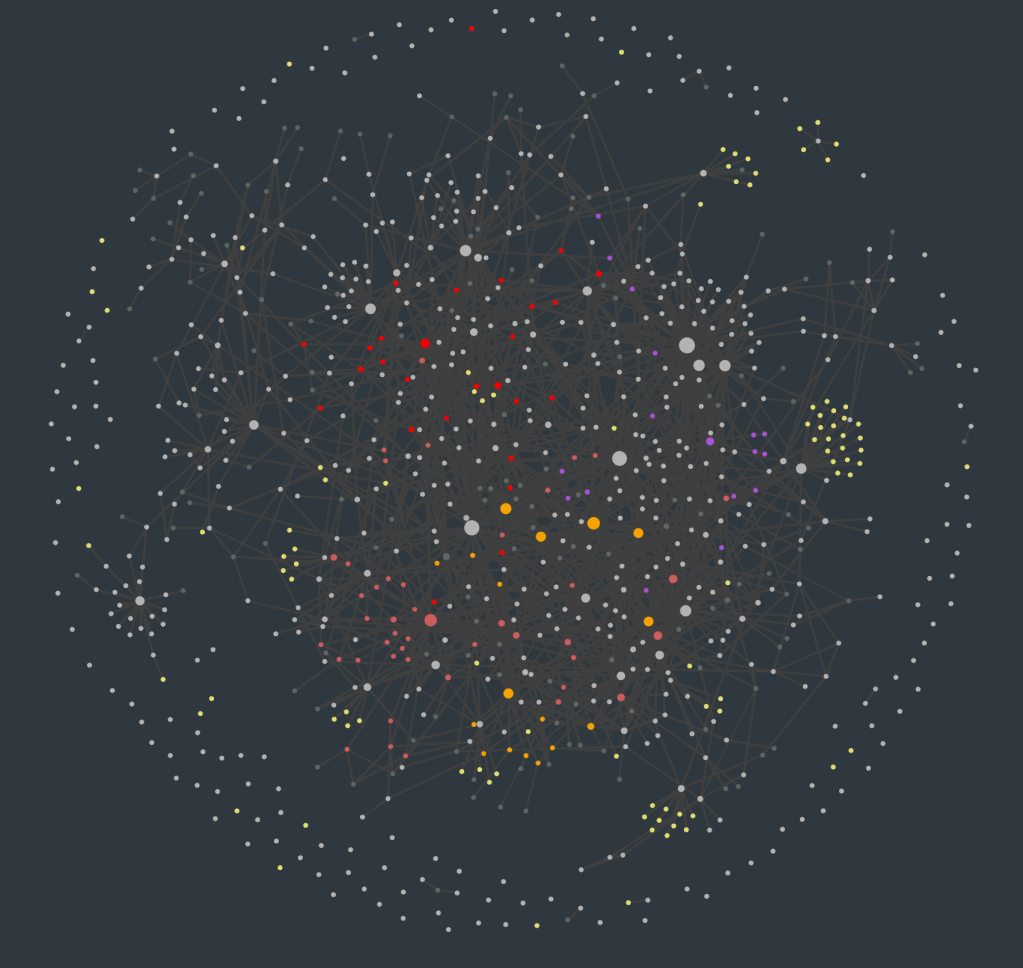
Its literally a second brain.
Anyway, I use this as well as Claude to draft, document, and ultimately upload my blog posts to the site.
Why Claude (made by Anthropic) you ask?
Because they pissed off the White House. Any company, even AI, willing to do that is worth it in my book.
Now, I’ll let claude provide some context into how this works from its side now.
The Framework: Human Ideation + AI Structure + Human Refinement
Stage 1: Ideation (Human)
- You identify the topic and why it matters
- You have a quick conversation with Claude to define scope, audience, angle
- This is 100% human judgment—the AI doesn’t decide what’s worth writing
Stage 2: Scaffolding (AI)
- AI generates the structural framework—headers, flow, key points. This is stored in a “Drafts” folder in Obsidian.
- Think of it as an outline on steroids, but still just a skeleton
- The AI does the heavy lifting of “what should come next?”, and stores it in a simple to edit text file.
Stage 3: Refinement (Human)
- You inject your voice, examples, and specificity, or delete anything as needed.
- You edit, cut, rewrite, disagree with the structure
- You decide what stays, what goes, what gets reframed
Stage 4: Publishing (System)
- Once you provide explicit approval, Claude handles the site formatting, publishing, tagging, and categorizing, on the WordPress site.
- So you have a record of what Claude has done, claude then moves the file from “Drafts” to from draft to approved folder in your notes
- Add metadata (approval date, published URL, categories, tags)
- Publish to WordPress with a clear audit trail
Why This Works
For the writer:
- Breaks through blank-page anxiety
- Removes all concerns about actually managing a website, and allows you to just write/ideate with a sounding board (Claude)
- Speeds up the drafting phase without sacrificing your voice
For the reader:
- Your authentic voice remains intact
- You’re writing about what genuinely interests you, not what AI suggests
- The structural clarity actually serves the reader
For consistency:
- Having a clear workflow means you’re more likely to actually publish
- The system is repeatable, which means more content over time
What This Isn’t
- Not “AI writes your blog”
- Not removing your voice from the equation
- Not a shortcut to quality
- Not a one-size-fits-all template
Meta Note
This post itself is an example of the framework. It was ideated as “let’s write about our workflow,” structured by AI as skeleton points, and now refined by human voice and experience. It’s not perfect, but it got written.
That’s the whole point.
Thanks Claude!
I’m very interested to see how this workflow evolves over time. As I update the workflow, I’ll likely either update this blog post, OR I’ll make a new blog post. IDK! I have no idea how blogs work. I’ll figure it out.
 I’m Just a Guy with AI
Leave a comment